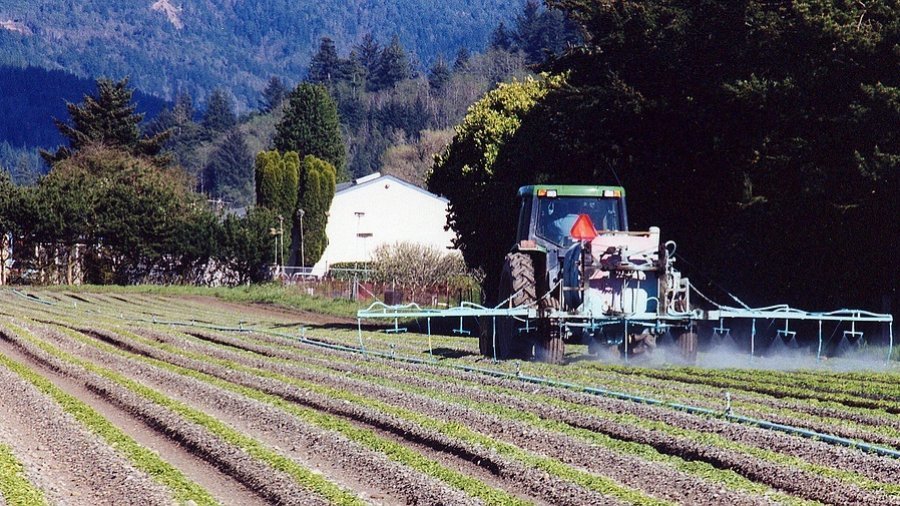
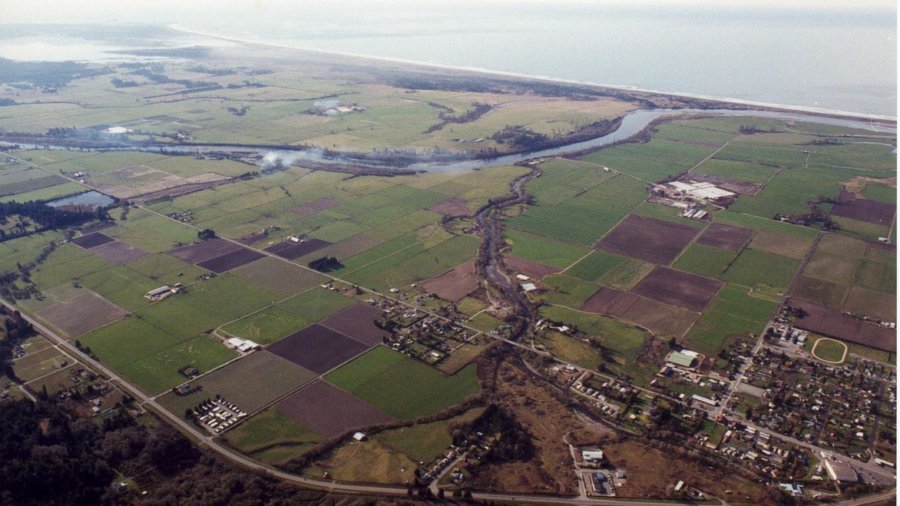
For the first time in history, Del Norte County Easter lily growers will be monitored and regulated by the state in response to the farmers’ ongoing pesticide contamination of the Smith River estuary. Yet the legal mechanism adopted by the state is unlikely to result in real protections for the estuary anytime soon.
On August 6 , 2026, the California North Coast Regional Water Quality Control Board voted 5-1 to adopt an Easter lily Agricultural Order that sets “thresholds” of allowable pesticide contamination in the Smith River estuary. Pesticide detections above the thresholds will trigger action to by the state to require lily growers to reduce contamination levels. The Order also lists “Best Management Practices” that lily growers may adopt in order to keep pesticides from fouling protected waters—contamination that has been occurring for nearly eighty years read more
State Water Board to take public testimony on widespread contamination of the nationally important Smith River.
On October 8, 2025, the full North Coast Regional Water Quality Control Board will hold a public meeting in Crescent City to take testimony on widespread pesticide contamination of the Smith River estuary.
Please make your voice heard! We need the public to tell the Water Board: End toxic pesticide contamination of the Smith River estuary.
The meeting:
Wednesday, Sep. 8, 2025
Del Norte County Board of Supervisors Chambers, 981 H Street, Crescent City Room 100
“It’s a toxic soup in there.”—NMFS fisheries biologist In April 2024, Siskiyou Land Conservancy released a comprehensive report that documents forty years of complicity by the state of California in the pesticide contamination of the Smith River estuary, in the far northwestern corner of California. Pesticide use now threatens the ongoing survival of at least
Read more
This year Siskiyou Land Conservancy celebrates our twentieth year in service of protecting critical habitat in northwestern California! We are forever grateful for our many individual and institutional supporters, who have allowed Siskiyou Land Conservancy to reach this milestone and continue contributing equitable solutions to environmental challenges that sometimes appear intractable. Read our annual newsletter
Read more
Despite finding 17 pesticides in estuary waters and 10 instances of contamination, Water Board has no plans to rein in chemical use
In late January, 2018, the state agency charged with enforcing the federal Clean Water Act released a long-awaited report on the results of two years of water quality testing in the Smith River Estuary. The testing detected 17 pesticides in the streams, creeks and ditches that feed the estuary, and 10 instances of contamination of the aquatic food chain. The findings appear to show that Easter lily farmers are in violation of the Clean Water Act, which was passed in 1972 in large part to protect precious aquatic resources such as the West Coast’s dwindling salmon populations.
Just before Easter, the national on-line news magazine TakePart has run a major story about pesticides used on the Smith River Plain to grow Easter lilies. TakePart describes itself as “the digital division of Participant Media,” the company that brought us such films as Academy Award winning Spotlight, as well as An Inconvenient Truth and CITIZENFOUR.