Siskiyou Land Conservancy
Protecting California’s Wild North Coast and Rivers Since 2004

Special Report: Forty Years of State Complicity in the Pesticide Poisoning of California’s Wildest River

“It’s a toxic soup in there.”—NMFS fisheries biologist

In April 2024, Siskiyou Land Conservancy released a comprehensive report that documents forty years of complicity by the state of California in the pesticide contamination of the Smith River estuary, in the far northwestern corner of California. Pesticide use now threatens the ongoing survival of at least two federally protected Endangered Species, coho salmon and tidewater goby. Read report here.

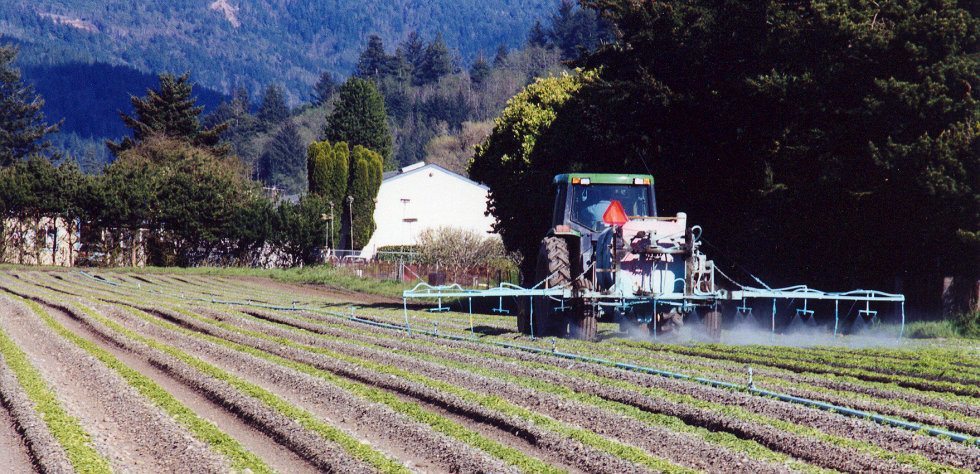
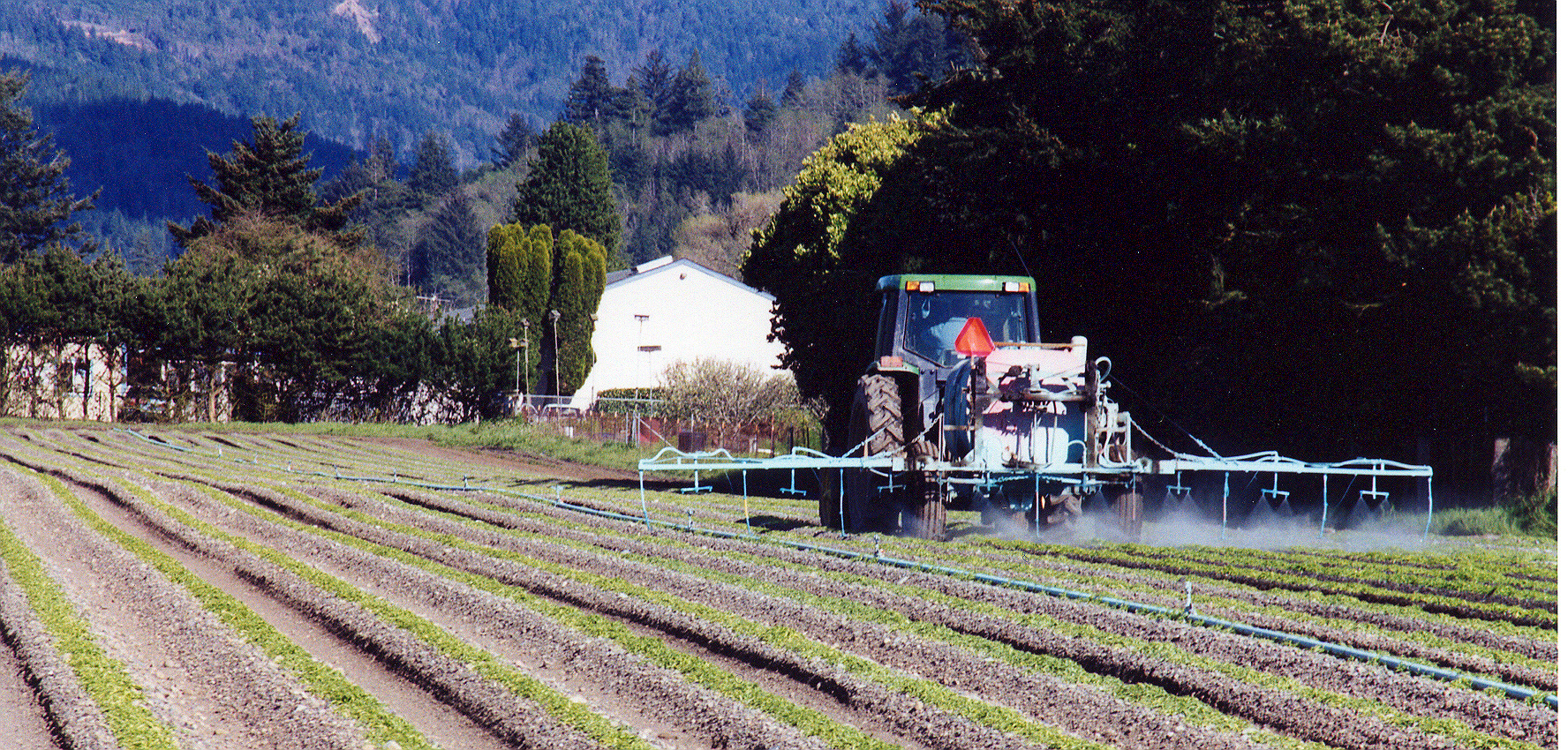
Farmer applies the fungicides chlorothalonil, a carcinogen, and copper hydroxide on Easter lily fields in 2001. A 30-mph wind pumps the chemicals directly into Smith River Elementary School.

No Response from County or State Governments to Health Assessment that shows Pesticide Poisoning in Smith River

In late 2016 Siskiyou Land Conservancy released our Smith River Community Health Assessment, which clearly demonstrates that pesticides used in the cultivation of Easter lily bulbs in, Del Norte County, are impacting the health of people who live in the small town of Smith River.

Yet despite our entreaties, Siskiyou Land Conservancy has received a particularly cold shoulder from officials at the Del Norte County Department of Health and Human Services. This year department officials agreed to meet with us in their Crescent City offices, but the reception was chilly at best. The best that the four health officials in the room could do was to request a significant quantity of further information. And while this additional information clearly was not needed to ascertain the legitimacy of the Health Assessment, nor to understand the devastating nature of the findings, we nonetheless spent significant time and expense to provide it.

Since that the Del Norte Health and Human Services has taken no action, as far as we know, to address the serious health concerns raised by the Assessment. Likewise, officials at the California Department of Pesticide Regulation (70 percent of whose budget is derived from pesticide sales) are ignoring the findings.

You can contact the county Health Department here. Tell them that the county needs to follow up on Siskiyou Land Conservancy’s Smith River Community Health Assessment by enlisting state and federal experts to visit the community and conduct a follow-up health survey.

You can submit complaints to the state here.

For more on the Smith River Community Health Assessment, including the full report, continue reading.

The Smith River Community Health Assessment is the result of a survey mailed in 2016 by Siskiyou Land Conservancy to all residents of the isolated California town of Smith River, which lies near the estuary of the Wild and Scenic Smith River just a few miles south of the Oregon border. Smith River (population 2,000) has been called the “Easter Lily Capital of the World” because all Easter lily bulbs grown for use in North America are produced by just four growers in fields that surround the town and the Smith River estuary.

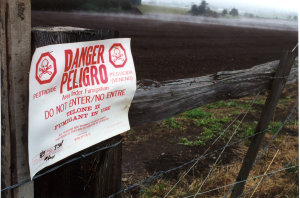
Smith River lily farmers apply high concentrations of several toxic pesticides. Many of the chemicals are carcinogens, including the fumigants metam sodium and 1,3-dichloropropene, which are used on this remote stretch of rugged California coast in pounds-per-acre concentrations that rival those used in California’s most industrial agricultural counties. Some of the pesticides can cause nerve damage and birth defects, as well as skin rashes, respiratory problems, eye problems, and other health issues.

Over the past three decades state agencies have repeatedly found pesticides from Smith River lily fields contaminating local air, groundwater and surface waters. A 2005 study by the California Environmental Protection Agency found that high concentrations of metam sodium and 1,3-D off-gassed for several days into Smith River neighborhoods. During the 1980s, and in 2002, scientists at the California North Coast Water Quality Control Board found widespread pesticide contamination of Smith River wells. In 2010 and 2013 the Water Board found significant pesticide contamination of streams that flow through lily fields to the Smith River estuary, including residues of 10 different pesticides and a finding of “acute (and) chronic reproductive toxicity” in the food chain that feeds the Smith River’s fabled salmon and steelhead populations.

Most people who responded to the health survey said they live very close to lily fields, many reported drinking water from domestic wells, and nearly half reported children currently or previously attending Smith River Elementary School, which is adjacent to lily fields. Many residents said they began experiencing significant health problems only after moving to Smith River. The survey found that incidents of skin rashes, eye problems, chronic coughs, digestive problems, neurological disorders, heart disease, headaches, cancer and other ailments increased after people moved to the town.

“For years we’ve been hearing from Smith River residents that they believe pesticides are impacting their health,” said Greg King, Executive Director of the non-profit Siskiyou Land Conservancy. “Until now there has never been a systematic assessment of the exposures experienced by residents, their concerns, and their health. This Health Assessment substantially supports the idea that damage being done to local residents by pesticides is real, it is significant, and it is avoidable.”

Siskiyou Land Conservancy is calling for lily growers to enter into a binding agreement to transition away from pesticides, and eventually to adopt organic farming methods. Organic farming is already a thriving industry in Del Norte County. Successful organic farms in the area include Alexandre Dairy, Ocean Air Farms, and beef production by Palmer Westbrook, Inc., among others. (Palmer Westbrook also grows Easter lilies, though not organically.)

“These enterprises demonstrate that organic production can be both sustainable and profitable in Del Norte County,” said King.

Dr. Ken Miller, a physician and SLC director who has studied the impacts of pesticides on human health, said that the health assessment “shows that residents are terribly concerned about the impacts of these pesticides, and they have good reason to be. These are some of the most dangerous and toxic pesticides allowed for use in California, and they are applied in very high concentrations with very little oversight or enforcement from state or local authorities. And now the health assessment demonstrates a high likelihood that they are making people sick.”

King notes that “as a land trust we support farmers, as long as they are farming in a way that isn’t destructive of the community and the natural environment. Siskiyou Land Conservancy has no interest in seeing economic harm come to lily growers. We want them to thrive, but only if they can grow their crops without toxic chemicals.” King said SLC would actively support efforts by lily growers to secure state and federal funding to ease the economic costs of transitioning to organic methods.

Siskiyou Land Conservancy is the only organization dedicated to eliminating excessive pesticide use on bottomlands that surround the vital Smith River estuary.

The Smith River Community Health Assessment was made possible by a grant from the Lisa and Douglas Goldman Fund.

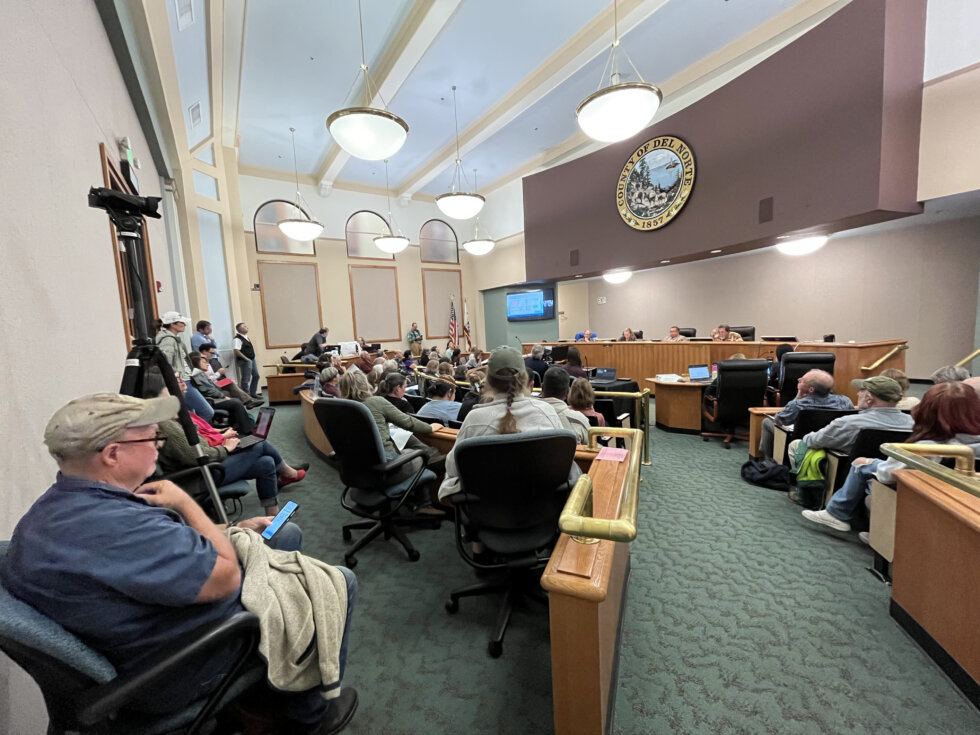
Will the State of California Finally Protect the Smith River Estuary from Dangerous Pesticides?

By Greg King

Executive Director, Siskiyou Land Conservancy

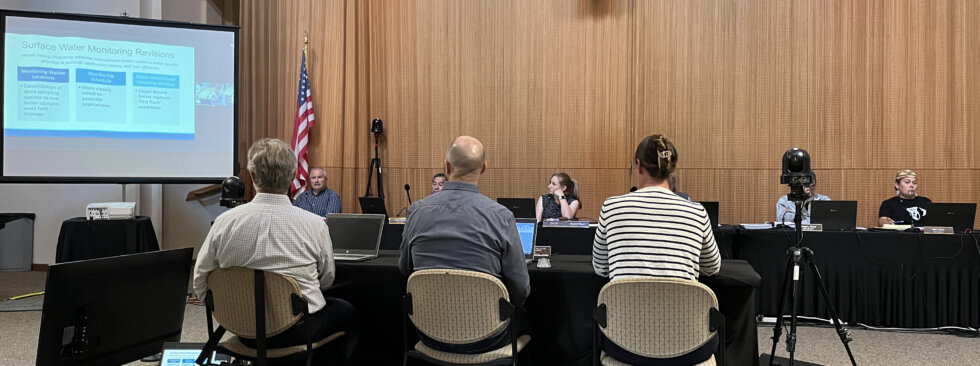
The California North Coast Regional Water Quality Control Board has resurrected a long moribund agricultural permit process to allow Easter lily farmers, in Del Norte County, to continue polluting the vital estuary of the Wild and Scenic Smith River and nearby human populations with high concentrations of deadly pesticides. Siskiyou Land Conservancy views this process as largely illusory, and more of a lengthy distraction, given the state’s decades-long refusal to protect the Smith River estuary and prohibit illegal discharges of pollutants into protected waters.

To read SLC’s comments on the first phase of the resurrected permit process—“Findings”— go here.

You can comment on the Water Board’s process at any time. Send an email to the Water Board via Brenna.Sullivan@Waterboards.ca.gov and cc Ben.Zabinsky@waterboards.ca.gov and David.Kuszmar@waterboards.ca.gov. We also encourage you to write to your state and federal representatives.

To support Siskiyou Land Conservancy’s efforts at the Smith River estuary, please donate.

In this resurrected process, Siskiyou Land Conservancy is advocating for a permit that requires Easter lily farmers to abide by pesticide prohibitions established under California standards for organic agriculture. That is, pesticides that are not allowed for use on organic farms must be banned for use on  Easter lilies, which are grown on delicate wetlands that surround the Smith River estuary. Nothing else can save the Smith River estuary from the severe instances of contamination that have been uncovered at the estuary several times since the early 1980s.

Siskiyou Land Conservancy has spent twenty years advocating for elimination of pesticide use on wetlands that surround the Smith River estuary, which is the longest involvement in the Smith River pesticide issue by any organization other than the Water Board itself.

The state’s process works like this: the Water Board, under the National Pollutant Discharge Elimination System created by the federal Clean Water Act, and with input from a Technical Advisory Group (SLC is a member of the group), creates a “permit” with certain sideboards that ostensibly will limit pollutant discharges into “waters of the state.” Like it sounds, the state is basically issuing what’s commonly known as a “permit to pollute.” The draft permit is being created in stages. The first and current stage is to create a “Findings” section of the permit; that is, what is known so far about pesticide contamination at the Smith River estuary.

For a deeper look at the crisis of pesticide pollution at the Smith River estuary, read our 40-year history of the issue go here.

Insist that the state of California prohibit all uses of toxic pesticides on lands that surround of the Smith River estuary, which is the only means of preventing the extinction of endangered species. The Smith River is California’s wildest large watershed, the last remaining undammed major river in the state. The Smith is the fourth-largest coastal river in California, and it is among the world’s cleanest rivers. The Smith River is considered to be the “crown jewel” of the federal Wild and Scenic River system—the Smith contains more miles of federally designated Wild and Scenic River status than any other U.S. watershed. The Smith River therefore, and not surprisingly, provides refugia for numerous rare and sensitive species. The importance of a healthy Smith River therefore extends up and down the West Coast of the United States, particularly California, as an island of critical biological refugia.

The Smith River is so biologically significant that the Institute for River Ecosystems at Cal Poly Humboldt has identified the watershed as a “recolonization” source, or seed bank, for Endangered Species in impaired watersheds up and down the California-Oregon coast—a designation that takes on heightened importance as West Coast salmonid populations face extinction, and as the world’s northernmost population of endangered tidewater gobies now clings to existence in the Smith River estuary. The federal government has designated this lowermost reach of the river to be “essential fish habitat” for all Pacific salmon under the Magnuson-Stevens Fishery Conservation and Management Act.

No matter the Smith River’s otherwise pristine nature, according to state and federal studies even the Smith River’s salmonid populations are shrinking. The National Marine Fisheries Service (NMFS) has identified agriculture in the Smith’s lower reaches as the primary contributor to diminishing numbers of aquatic species in the watershed. Such agricultural uses include beef and dairy production, which has resulted in significant alteration of the size, suitability, and hydrology of estuary habitat.

Yet pesticide use alone may pose the greatest threat to protected species, and to humans, in and around the Smith River estuary. At the mouth of the Smith River is the 10,000-acre Smith River Plain, an expanse of rich bottomland and seasonal wetlands that surrounds the Smith River estuary. Here farmers use heavy annual applications of agricultural chemicals to produce the nation’s most extensive crops of wholesale Easter lily bulbs, pesticides that are poisoning endangered salmon, steelhead, and other aquatic species, and the food chain that supports them.

The crisis at the Smith River estuary is so acute that in 2018 NMFS sent lily growers a federal “Section 9” letter informing them that their pesticide applications were in violation of the Endangered Species Act for illegal “take” of coho salmon. More than a century of industrial abuse of western watersheds of North America, combined with the current onset of climate change, has resulted in an extinction process that currently is accelerating throughout the West. The Smith River still serves as a wild refuge from this ongoing crisis, and this refuge needs and deserves every possible form of environmental protection. It is time for California officials to adequately perform their legal duties and enforce state and federal water laws to the fullest extent possible at the Smith River estuary. Such enforcement must result in the total elimination of toxic pesticide use on bottomlands that surround the Smith River estuary. Barring such elimination, humanity could watch even as the Smith River’s heralded but endangered aquatic species succumb to extirpation and extinction.

A Message From the Executive Director About Easter Lily Pesticides

It’s probably safe to say that no one likes using pesticides. Even Easter lily farmers have told me that “we don’t like using them,” adding that they have “no choice.” The lily bulb crops would be ruined, they say, without the 300,000 pounds of dangerous chemicals they apply each year to farmlands that surround the Smith River estuary and border residential neighborhoods and an elementary school.

Certainly farming is economically fraught. The weather, the pests, the whims of fickle consumers. Individually and combined, the challenges facing farmers are many.

Personally, I have worked for fifteen years to get these dangerous chemicals out of the lower Smith River. In that time I have come to know Easter lily bulb producers as small-town family farmers who love their families, their work, and their communities. Pesticides and petrochemical fertilizers offer them a Faustian bargain of predictability in an industry that can otherwise be wholly unpredictable. I understand their dilemma.

But the pesticides have to go. Water testing has shown that these chemicals are attacking the precious aquatic life of the Smith River estuary. Now, Siskiyou Land Conservancy’s Smith River Community Health Assessment demonstrates that people are suffering as well. No matter how deeply I understand the economic plight of lily growers, I still can’t accept their intensive use of very dangerous chemicals in a small, concentrated area to produce an ornamental flower. Clearly there is a better way. It’s the 21st century, and organic is mainstream.

One reason I founded a land trust was to work with people, instead of against them, to achieve environmental protection. The mission of Siskiyou Land Conservancy includes support of farmers. In this spirit we have asked Easter lily growers to join us in a negotiation process that would result in a total elimination of Smith River of pesticides that are not allowed under national organic standards. During negotiations we will actively support federal and state funding to allay any economic risks lily farmers may encounter during such a transition.

Make no mistake, if negotiations fail, we will do what it takes to rid the Smith River estuary of these toxic chemicals. However, we hope that negotiations might finally, and peacefully, rescue the lower Smith River from the scourge of pesticides while allowing Easter lily farmers to maintain profitable and sustainable operations. At that point Siskiyou Land Conservancy can fully return to the work we do best: assisting willing landowners, and farmers, to protect critical North Coast habitats in perpetuity.