Siskiyou Land Conservancy

Protecting California’s Wild North Coast and Rivers Since 2004

State Finally Creates Legal Framework for Protecting the Smith River estuary From Pesticides

In the face of the overall weakness of the state’s action, SLC Continues to  advocate for a pesticide-free Smith River estuary

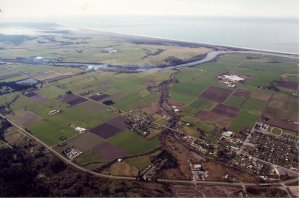
For the first time in history, Del Norte County Easter lily growers will be monitored and regulated by the state in response to the farmers’ ongoing pesticide contamination of the Smith River estuary. Yet the legal mechanism adopted by the state is unlikely to result in real protections for the estuary anytime soon.

On August 6 , 2026, the California North Coast Regional Water Quality Control Board voted 5-1 to adopt an Easter lily Agricultural Order that sets “thresholds” of allowable pesticide contamination in the Smith River estuary. Pesticide detections above the thresholds will trigger action to by the state to require lily growers to reduce contamination levels. The Order also lists “Best Management Practices” that lily growers may adopt in order to keep pesticides from fouling protected waters—contamination that has been occurring for nearly eighty years read more

Transcript of the Address by SLC Executive Director Greg King to the State Water Board.
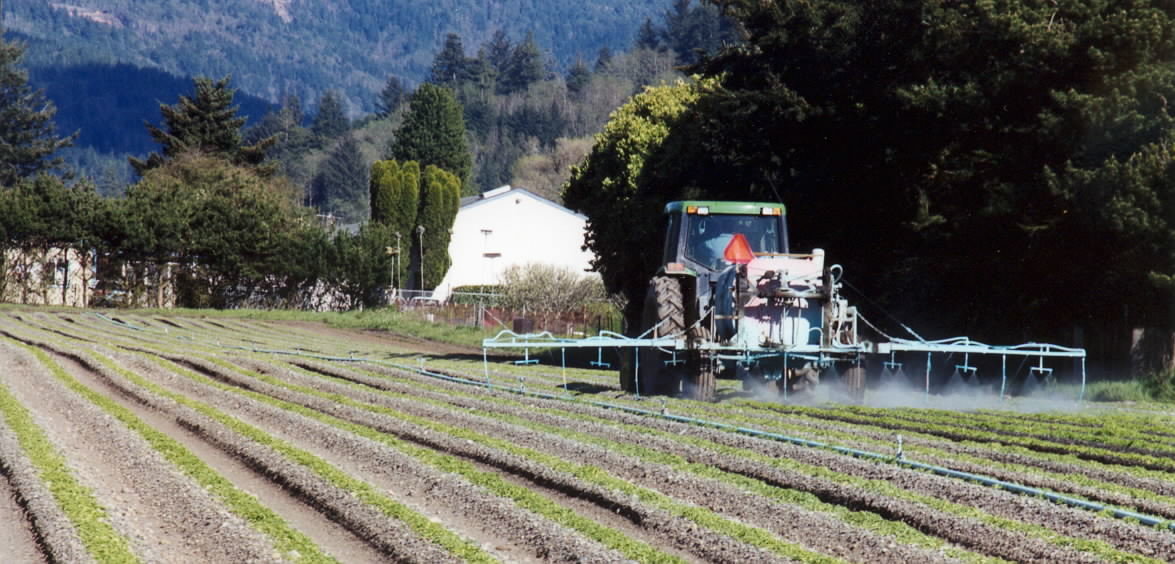
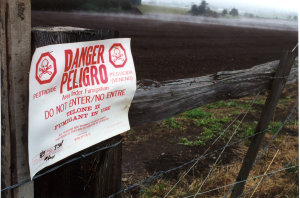
Lily farmer applies Chlorothalonil, a carcinogen and reproductive toxin, into a 30 mile-per-hour wind that blows directly into Smith River Elementary School, while school was in session.

SLC Protecting and Restoring
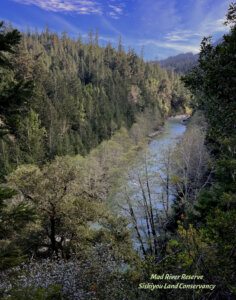
the Mad River Reserve

Summer 2026 In the summer of 2025, after Siskiyou Land Conservancy secured ownership of two adjacent riverfront properties along Baduwa’t (the Mad River), we knew we had our work cut out for us. The Mad River Reserve spans 353 acres…Read more

Huge Crowd Tells Water Board: Stop the Pesticide Poisoning of the Lower Smith River

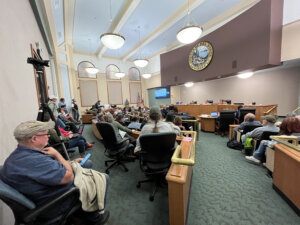
In Del Norte County on October 8, 2025, more than 70 people attended a meeting of the North Coast Regional Water Quality Control Board to tell the state: Enough is enough, stop allowing Smith River easter lily farmers to poison the habitat and the people of the lower Smith River.

The epic meeting began at 6 p.m. and lasted five hours, yet few in the standing-room-only crowd left early. Water Board staff took nearly three hours to report to the four-member Water Board on state efforts to create an agricultural permit that would allow Smith River Easter lily farmers to continue polluting the river’s estuary and impacting local residents. read full article

NEWS

Special Report: Forty Years of State Complicity in the Pesticide Poisoning of California’s Wildest River

“It’s a toxic soup in there.”—NMFS fisheries biologist In April 2024, Siskiyou Land Conservancy released a comprehensive report that documents forty years of complicity by the state of California in the pesticide contamination of the Smith River estuary, in the far northwestern corner of California. Pesticide use now threatens the ongoing survival of at least Read more

No Response from County or State Governments to Health Assessment that shows Pesticide Poisoning in Smith River

In late 2016 Siskiyou Land Conservancy released our Smith River Community Health Assessment, which clearly demonstrates that pesticides used in the cultivation of Easter lily bulbs in, Del Norte County, are impacting the health of people who live in the small town of Smith River .

State Finds New Evidence of Pesticide Contamination in Smith River Estuary

Despite finding 17 pesticides in estuary waters and 10 instances of contamination, Water Board has no plans to rein in chemical use In late January, 2018, the state agency charged with enforcing the federal Clean Water Act released a long-awaited report on the results of two years of water quality testing in the Smith River Estuary. The testing detected 17 pesticides in the streams, creeks and ditches that feed the estuary, and 10 instances of contamination of the aquatic food chain. The findings appear to show that Easter lily farmers are in violation of the Clean Water Act, which was passed in 1972 in large part to protect precious aquatic resources such as the West Coast’s dwindling salmon populations.

Easter Lily Pesticides in the News

Just before Easter, the national on-line news magazine TakePart has run a major story about pesticides used on the Smith River Plain to grow Easter lilies. TakePart describes itself as “the digital division of Participant Media,” the company that brought us such films as Academy Award winning Spotlight, as well as An Inconvenient Truth and CITIZENFOUR.

SLC, Easter lilies and pesticides on Jefferson Exchange radio Friday, March 25

Siskiyou Land Conservancy Executive Director Greg King will be a guest on the popular radio show the Jefferson Exchange on Friday, March 25th at 8:30 a.m. to discuss pesticide use on the Smith River Plain. Jefferson Public Radio airs on 11 stations, from Central Oregon to the Mendocino Coast, so to find the station nearest Read more

New Report Shows Pesticide Combinations Greatly Increase Cancer

The Sustainable Technology & Policy Program at UCLA recently released a report that shows a combination of three commonly used, carcinogenic fumigants — two of which, metam sodium and 1,3-dichloropropene, are used in high concentrations on the Smith River Plain — “can interact to synergistically (to) increase the toxicity to humans.” What that means is that the whole carcinogenicity is greater than the sum of the carcinogenic parts.Read More