Summer 2026 In the summer of 2025, after Siskiyou Land Conservancy secured ownership of two adjacent riverfront properties along Baduwa’t (the Mad River), we knew we had our work cut out for us. The Mad River Reserve spans 353 acres…Read more

Summer 2026 In the summer of 2025, after Siskiyou Land Conservancy secured ownership of two adjacent riverfront properties along Baduwa’t (the Mad River), we knew we had our work cut out for us. The Mad River Reserve spans 353 acres…Read more
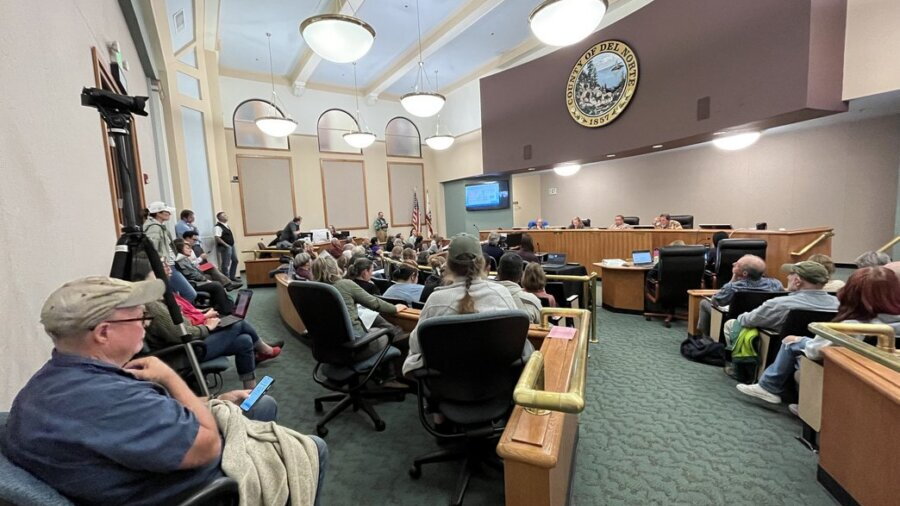
In Del Norte County on October 8, 2025, more than 70 people attended a meeting of the North Coast Regional Water Quality Control Board to tell the state: Enough is enough, stop allowing Smith River easter lily farmers to poison the habitat and the people of the lower Smith River.
The epic meeting began at 6 p.m. and lasted five hours, yet few in the standing-room-only crowd left early. Water Board staff took nearly three hours to report to the four-member Water Board on state efforts to create an agricultural permit that would allow Smith River Easter lily farmers to continue polluting the river’s estuary and impacting local residents. read full article
Will the State of California Finally Protect the Smith River Estuary from Dangerous Pesticides?
The California North Coast Regional Water Quality Control Board has resurrected a long moribund agricultural permit process to allow Easter lily farmers, in Del Norte County, to continue polluting the vital estuary of the Wild and Scenic Smith River and nearby human populations with high concentrations of deadly pesticides. Siskiyou Land Conservancy views this process as largely illusory, and more of a lengthy distraction, given the state’s decades-long refusal to protect the Smith River estuary and prohibit illegal discharges of pollutants into protected waters. Read more.
To read SLC’s comments on the first phase of the resurrected permit process—“Findings”.
In 2025, Siskiyou Land Conservancy acquired two beautiful and ecologically vital riverfront properties on Baduwa’t, or the Mad River, in Humboldt County, California, to create a 353-acre reserve on this important North Coast river. Read More
“It’s a toxic soup in there.”—NMFS fisheries biologist In April 2024, Siskiyou Land Conservancy released a comprehensive report that documents forty years of complicity by the state of California in the pesticide contamination of the Smith River estuary, in the far northwestern corner of California. Pesticide use now threatens the ongoing survival of at least Read more
Still slogging through the state’s malfeasant muck at the Smith River estuary! Historic contamination at the Smith Riverestuary by the carcinogenic pesticide 1,2-dichloropropane. Map created in 2002 bythe Smith River Project, which mergedwith Siskiyou Land Conservancy in 2004. During the past five years the California North Coast Regional Water Quality Control Board has taken several Read more
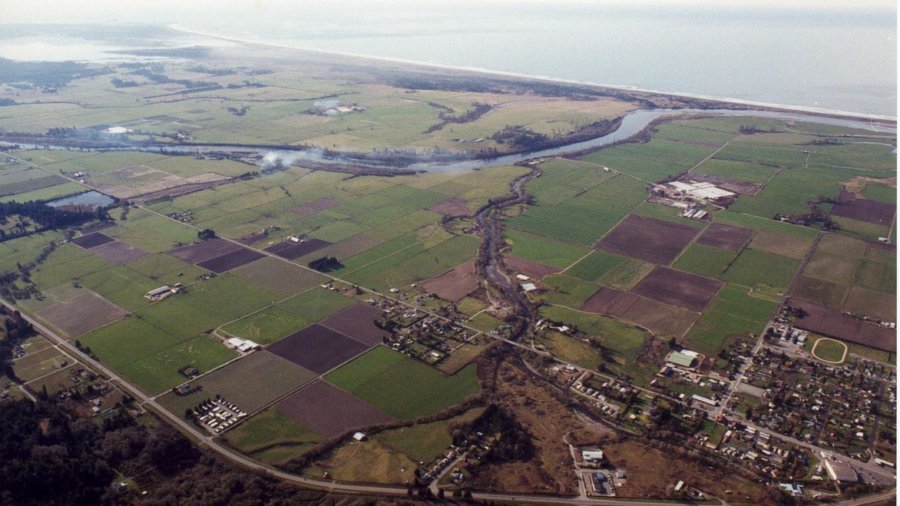
Despite finding 17 pesticides in estuary waters and 10 instances of contamination, Water Board has no plans to rein in chemical use In late January, 2018, the state agency charged with enforcing the federal Clean Water Act released a long-awaited report on the results of two years of water quality testing in the Smith River Estuary. The testing detected 17 pesticides in the streams, creeks and ditches that feed the estuary, and 10 instances of contamination of the aquatic food chain. The findings appear to show that Easter lily farmers are in violation of the Clean Water Act, which was passed in 1972 in large part to protect precious aquatic resources such as the West Coast’s dwindling salmon populations.
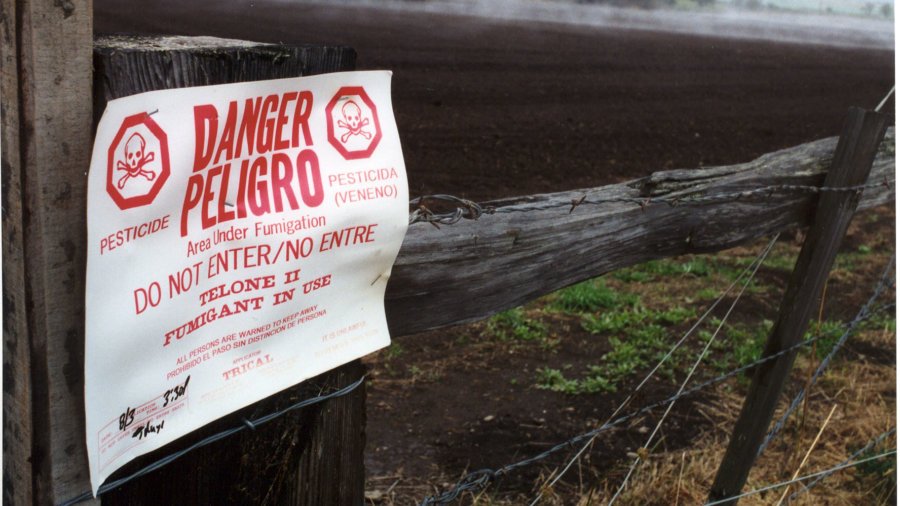
In late 2016 Siskiyou Land Conservancy released our Smith River Community Health Assessment, which clearly demonstrates that pesticides used in the cultivation of Easter lily bulbs in, Del Norte County, are impacting the health of people who live in the small town of Smith River .
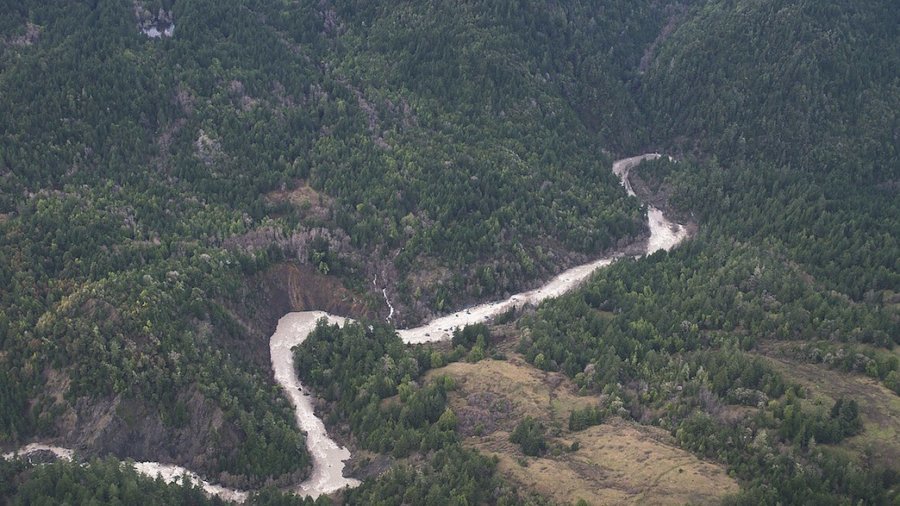
Siskiyou Land Conservancy has completed one of our most exciting projects yet. In October 2016 we recorded a conservation easement to protect the natural values of a 183-acre parcel on the Mad River, above Maple Creek in Humboldt County.
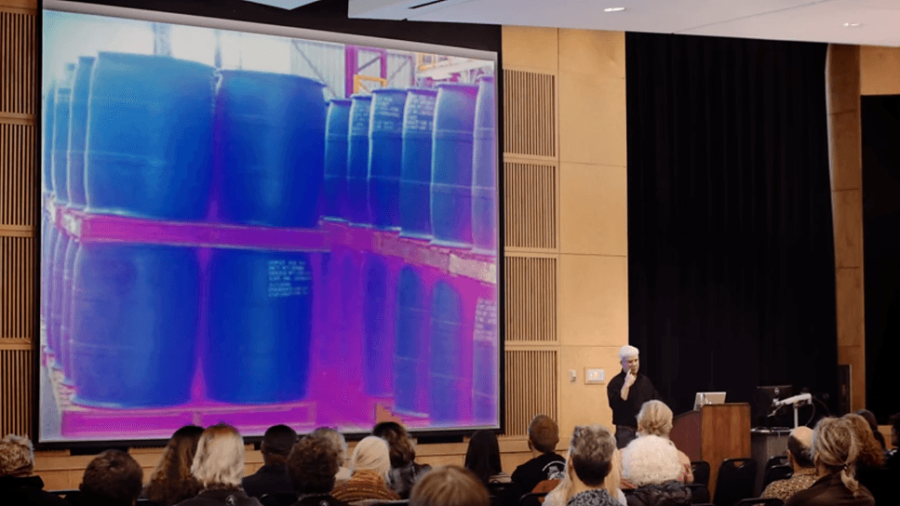
In March 2015, in one of the most Orwellian displays of deference to industry ever shown by a California state agency, the California Department of Pesticide Regulation (DPR) gave Easter lily farmers an “Integrated Pest Management (IPM) Innovator Award” for allegedly reducing pesticide use “by about 50 percent over the last 20 years.” Read More