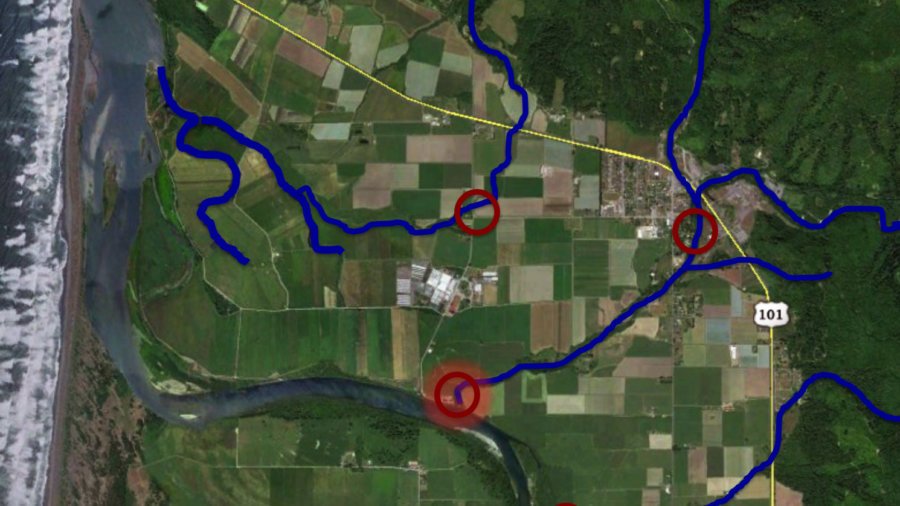
Since 2001, Siskiyou Land Conservancy and our predecessor, the Smith River Project, have led efforts to reduce and eliminate the annual application of 300,000 pounds of highly toxic fumigants, herbicides and fungicides on 1,000 acres of bottom land that surrounds the Smith River estuary, in Del Norte County. These pesticides are used to grow 100 percent of North America’s production of Easter lily bulbs. Two of these pesticides — the carcinogenic and fish-killing fumigants metam sodium and 1,3-Dichlropropene — are used on lily fields in pounds-per-acre amounts that are higher than anywhere else in California, which is really saying something.
What’s perhaps most dumbfounding about such a high level of toxic pesticide use is exactly where they are applied: At the richest and most vulnerable reach of one of the world’s cleanest rivers. Superlatives describing the Smith River watershed, which is located in the far northwestern corner of California, are inexhaustible and in no way overstated. The Smith is unique among coastal rivers in the United States, and there are few watersheds like it remaining in the world’s temperate zones. Read More
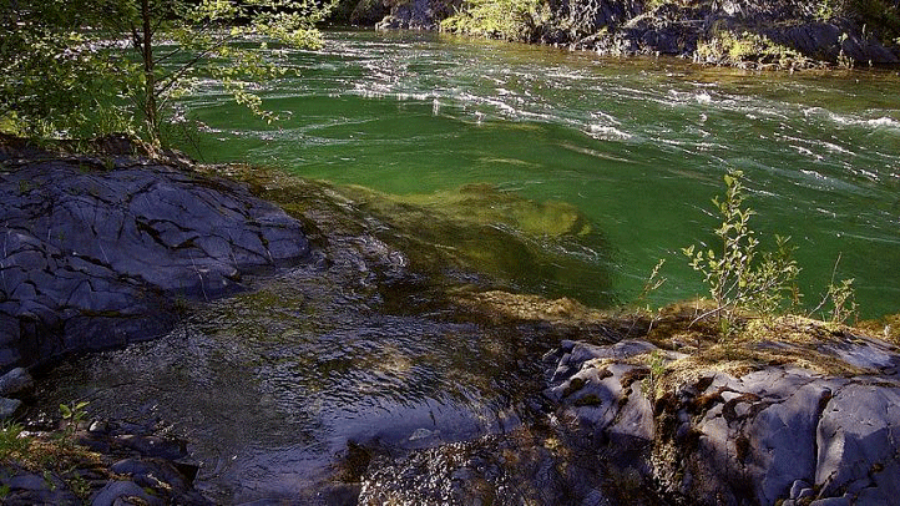
In 2005 Siskiyou Land Conservancy recorded a conservation easement to protect a unique 148-acre privately held wild land along the Wild and Scenic South Fork Smith River. The property is home to the easternmost redwoods on the Smith River, as well as the largest privately held flat on the South Fork Smith River.
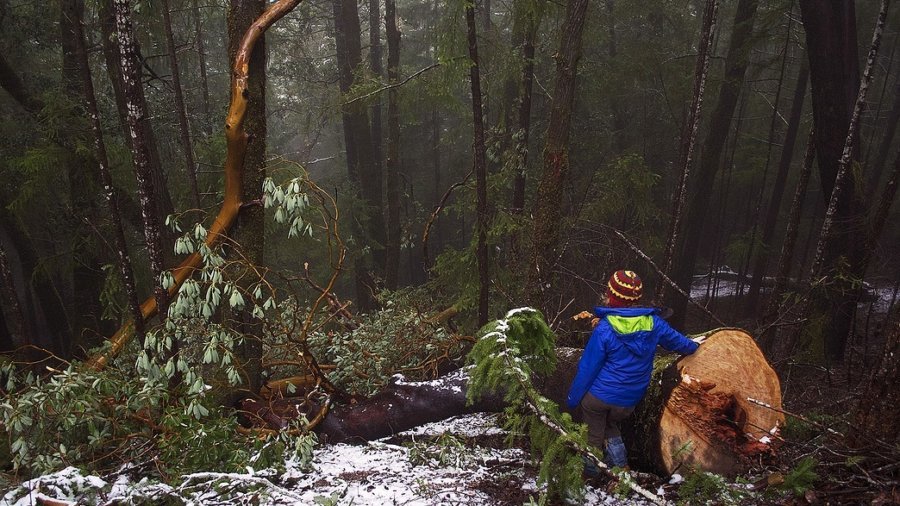
There’s tree poaching going on in the Smith River National Recreation Area (SRNRA), near Big Flat on the South Fork Smith River. Not just any trees, but some of the biggest, oldest madrones in the region. It’s a tragic, bitter loss of some of the finest trees around, in protected old growth area. If you
Read more
The two-year-old water testing results are finally in: “28 quantifiable concentrations of 11 different detected pesticides … acute [and] chronic reproductive toxicity” in the salmonid food chain, elevated copper and nutrients. Yet the North Coast Regional Water Quality Control Board, in its just-released report on Smith River estuary water testing that was conducted in 2013
Read more
In 2008, Siskiyou Land Conservancy Executive Director Greg King was leading the Northcoast Environmental Center to eventually reject the Klamath River deals that were negotiated over a three-year period, and were ostensibly designed tear down four dams on the Klamath River and provide the river with adequate flows for fish. This was never the intent of several
Read more